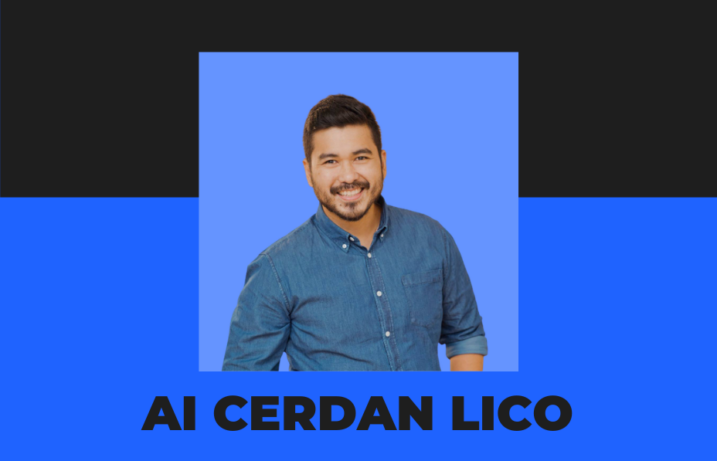
Meet AI Cerdan Lico
Al Cerdan Lico is a student in Flatiron School Accelerated AI Engineering Immersive program, leveling up by utilizing AI to create apps and learning new tools.
In his interview, he shares how a layoff became the catalyst to pivot from customer support into tech through Flatiron’s work-integrated learning program, where he is strengthening Python and learning data modeling and visualization while also growing collaboration skills by working in a team on real codebases.
Snapshot
Current Job Title: AI Engineering Apprentice
Current Employer: Flatiron School
Past Employers: Collaborative Solutions, OneSource Virtual, Accenture,
Experience: 8 years in consulting and customer support
GitHub: https://github.com/alpogi2dmax/
LinkedIn: https://www.linkedin.com/in/alcerdanlico/
Technical/Professional Skills: JavaScript, TypeScript, Python, React, Node.js, Express.js, Flask, SQLite, PostgreSQL, HTML, CSS, REST APIs, Git, GitHub, Markdown
What They’re Learning: “The data cleaning and data modeling aspects are new to me. Pandas is a new technology that I’m being exposed to and loving. As I’ve mentioned, Matplotlib and Seaborn are new as well.”
Favorite Part of Your Job: “Building a task manager app that’s going to be used by apprentices so that we can track the progress that we’ve made and the projects and tasks we’re currently working on.”
Full Q&A with Al
Intro
- Can you tell us a little about yourself? Your name, which work-study program you’re in, where you’re working, etc.
- My name is Al Cerdan Lico. I’m part of the Accelerated AI Engineering Immersive. I’m currently not doing anything else, but prior to this, I’ve been involved with different self projects. I tried to build my tech stack as well. I was introduced to software engineering and the tech field through Flatiron software engineering course, but I was definitely interested even before that. This has been my journey into software engineering, data science, AI, and tech as a whole.
Warm-Ups
- What’s your favorite studying snack?
- Coffee is my favorite studying snack. It keeps me awake while reading. I definitely need my caffeine fix in the morning and three or four times the rest of the day.
- What’s your favorite game?
- I’ve been playing, and I’ve stopped now because I felt it takes too much of my time. I’ve been playing Marvel Rivals a few months ago, and it’s because I wanted to spend time with my son, who was into Marvel Rivals at that time. So I was also a Marvel fan. I was playing that with my kid. He stopped playing it, but I can’t stop. I continued playing it for a while and said I need to stop this, which I did. Aside from that, I do crosswordle every day, anything within that space. I also do Sudoku.
- What do you do away from screens?
- I live a very boring life. Aside from this, a lot of cleaning and a lot of cooking at home. I have two boys who’s all constantly Hungry, so I make sure that I prepare snacks and meals for them every time. I play the guitar every once in a while, watch movies, TVs with my family. K-dramas is something that we constantly watch with my wife. We always find the newest K-drama to watch. That’s pretty much it, very homebound.
Core Questions
- Tell me about your career in development so far, what are some of your career highlights/accomplishments?
- In terms of my tech career, started very late, just around two years ago. My background was mostly in customer support. A little bit of background about myself is we were formerly from the Philippines. We migrated here to the States back in 2018, and I was fortunate to find a role in the tech world, working as support for Facebook through Accenture. I was working with Accenture at that time and did that for two years. That’s for their business processes as well as tech API, without any background in tech. So it was just merely customer support, and I had to learn here and there while I was in the role. And then I moved on to a Workday practice as a consultant, also without any background. So I felt at that time I needed to learn coding if I wanted to succeed in tech. So that opportunity was presented to me when I was laid off two years ago. It was a perfect time to learn new stuff. So I enrolled in the software engineering course through Flatiron. And since then, I’ve built my tech stack. I have a mentor who helps me, guides me on what tech stack to build. And now I’ve landed this opportunity with the Flatiron, which is great. It gives you the opportunity to work with others. When I was in the part-time certificate program, there was less opportunity for collaboration. But here, you work with other like-minded people who are also growing, which is definitely a great opportunity for me. And the data science and AI aspect also kind of builds into what I already know. So not a lot in terms of career growth, but definitely I have the drive to succeed in this field.
- You were at an inflection point in your career – why did you choose the Flatiron program to accelerate your career?
- Through a referral, actually. I have a cousin who went through the Flatiron program. Two of them, they’re sisters, went through the Flatiron program and were able to land very good roles after that. I said that’s something that I wanted to pursue. I wanted to learn tech. I wanted to still be in the tech environment. So I decided to do that as well. I’m very fortunate to be part of the program.
- Who is your Mentor/Facilitator? How do they support connecting the dots between learning and application?
- Right now in the program, my instructor is Bradley. He definitely helps the team and the class a lot with any questions that we have. He also gives a little bit of a background on on the modules that we’re going through. So currently, we are in the data modeling, basically Pandas, Matplotlib, and Seaborn. He also shares the projects that he was able to complete. He gives us an idea on what we can expect going through the module. Bradley is definitely helping us each and every way. It’s just two modules at this point, and I believe he will be helping us the rest of the way as well.
- What were your top considerations when choosing the Flatiron program?
- For me, two things. First is the learning portion of it, data science and AI. I do have a little background in data science when I worked as a performance manager in my previous role. I looked into the metrics, and I’m familiar with how to look into data, but now utilizing the tools that we have. And of course, having a background in coding does help out a lot because before, I just used Excel, SQL, and Tableau. That was pretty much the extent of the knowledge that I had. But having a background on the back-end really helps a lot in terms of building these tools. And the AI aspect of it, I’m still not there. But with the current trajectory of how tech is going, having a background in AI definitely helps out a lot. But what really intrigues me a lot is the opportunity to collaborate, which I mentioned earlier, working with other people, building projects from the ground up, which is what we’re doing right now. That’s something that I’ve looked forward to and now currently doing. So those are the two things that I considered when choosing this particular program.
- What are you working on now?
- So initially we were working with the Demos app, which utilizes AI in creating learning modules. And I think that’s what’s being pitched to companies. So what we did was basically just a trial period on how we can read existing code and how we can build from existing code. But right now we’re building a task manager app that’s going to be used by apprentices so that we can track the progress that we’ve made and the projects and tasks we’re currently working on. So we’re building an app which we will use to track our own progress. So that’s definitely exciting at this point.
- What skills are you learning/have you gained in the apprenticeship? How has this experience made you adaptable?
- A lot, in both aspects, the learning portion and the working portion. In the courses, of course, Python I already knew, but it’s good to have it reinforced. But right now, the data cleaning and data modeling aspects are new to me. Pandas is a new technology that I’m being exposed to and loving. As I’ve mentioned, Matplotlib and Seaborn are new as well. These tools definitely help me grow in this aspect. In the work portion, we were exposed to Next.js, which I’ve worked with before, but the impact it had on me was reading through existing code. Since all of the previous projects that I was doing were self-taught, I had to build the code base myself. But going through existing code is something that I’ve learned a lot from. Now going through Prisma, through the authentication process, and OAuth, those are things that I haven’t worked with before. I think being exposed to them and then learning from what you’re exposed to has really helped me a lot in terms of my technical growth.
- Being in a collaborative aspect, I think it means the tools are there because you kind of have to learn them since you have to build with them, right? For example, right now we’re using Prisma for our ORM. That’s something that I haven’t encountered before, but since we’ve agreed to use this technology, you’re kind of thrown into the water to learn from it, which I think is the best way to learn. Being in the midst of building it definitely helps out a lot. But I think more on the preparation side, that’s something that I’m learning. Since I didn’t work with a group before, I kind of winged it when I built my own projects. But now I’m working with a group, and there’s a lot of planning and preparation behind building something. We’ve met many times, kind of talking about how we want it to look, what our MVP would be, and what the schema would be. We’ve gone through that phase, and I think that helped me a lot in understanding the preparation side of it. Because coding, as long as you have the structure, as I’ve learned, is easier.
- How have you adapted your schedule to balance learning and your apprenticeship work?
- Drew is our senior engineer in our apprenticeship cohort. He always reminds us not to work more than four hours and to keep it within four hours. I mean, the reminder is great, but sometimes when you’re in the thick of it, you want to finish that particular task before you move on. What helps me a lot is the schedule. For example, in the data science program module, Bradley gives us milestones that we have to meet. If I feel as if I’m meeting that or am a little bit ahead, I’m good, which kind of leaves me some time to do the work portion of it and the coding portion of it. So being on top of the schedule helps me a lot. Honestly, aligning my schedule with the modules helps me a lot because that gives me some time to work on the other stuff as long as I’m meeting that particular goal.
- What advantage do you think you’ll have at the completion of the program?
- As I’ve said, working with the team, collaborating, the preparation, and I think it will just grow from there. In terms of the program for data science and AI, these are new skills that I haven’t been exposed to before, so it will definitely help me a lot, giving me more opportunities. That’s how I look at it as a software engineer. And now, having the opportunity to be a data scientist opens more doors for me in the future for roles within a company, or probably if there’s a personal venture that I would want to pursue, then I have these skills to do so.
- What excites you about this career path?
- My main focus, of course, is to be involved in an organization in a software engineering capacity. That’s why I’m focusing on building my skills through collaboration. But the data science aspect is something fairly new for me and definitely an interest as well. I’ve worked with data before, and if I can build with that as well, that’s something that I would want to pursue if there is an opportunity for me. But right now, since I’ve been introduced as a software engineering graduate, that’s something that I’m trying to pursue at this point.
- Is there a specific career path you’re looking at?
- I’ve been playing with AI in terms of the projects that I’ve been involved with. Also, working with the Demos app utilizes AI, so that definitely helps me a lot. In terms of what I know right now, it’s really using AI to build apps. For example, previously I built a voice AI assistant. As a personal project, I built a transcript manager or a meetings minutes manager, which utilized AI as well as voice recognition. I learned a lot through that. In terms of what I’m exposed to, that’s what I know. I’m very interested in how it will be applied in data science, so that’s something that I’m looking into as well in in terms of learning. But right now, it’s really more about what I build and integrating AI into what I build.